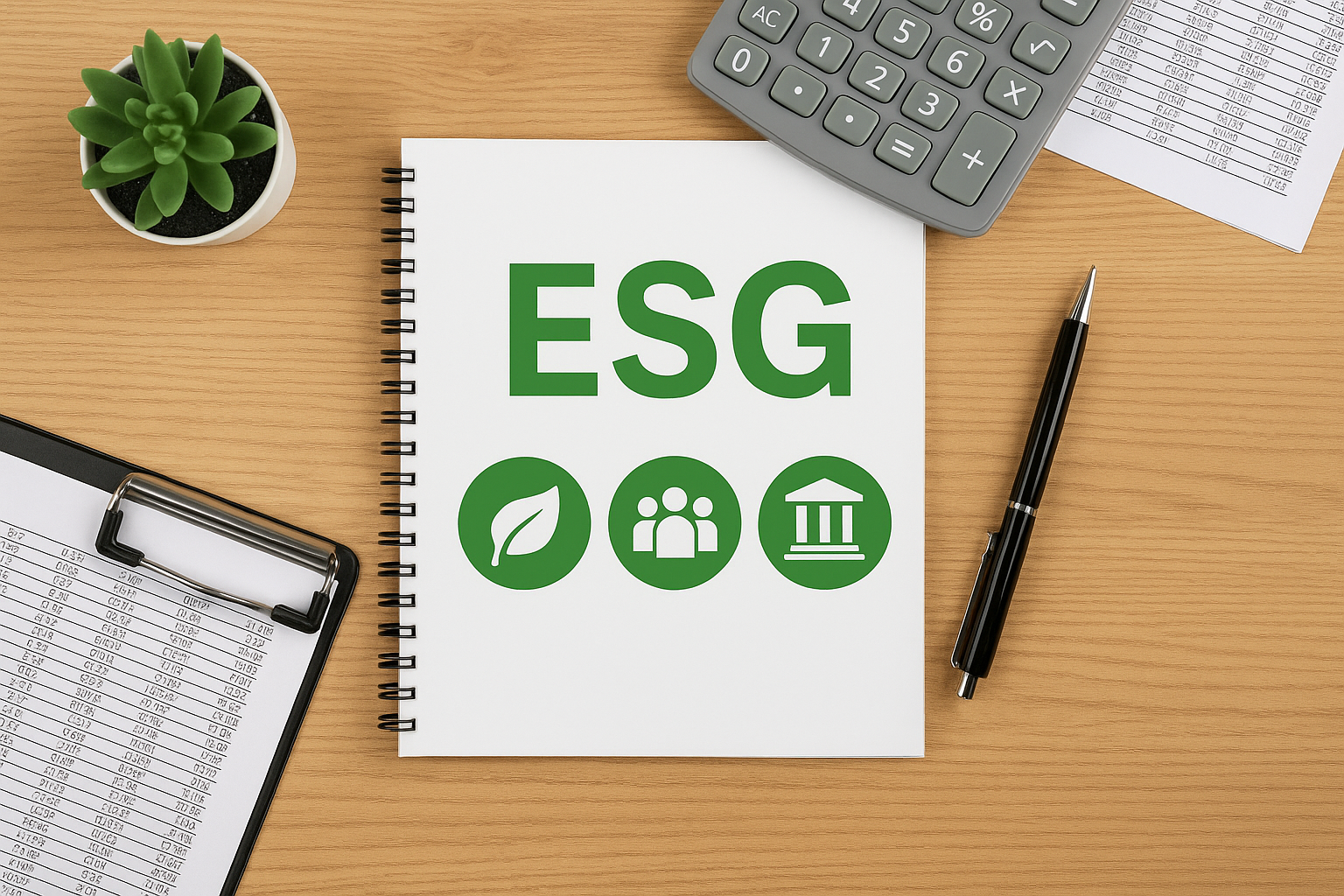
ESG Compliance in Accounting – Becoming the New Business Reality
ESG—Environmental, Social and Governance—criteria are increasingly influencing how Swiss companies operate and report their performance. Across various industries, ESG compliance in accounting is transitioning from a trend into a strategic necessity. Investors, regulators, and international partners expect transparent and responsible business practices supported by measurable sustainability indicators.
This article explores how ESG reshapes accounting and how SwissFirm helps companies implement ESG-ready financial processes.
What ESG Means for Accounting Today
Accounting is expanding from traditional financial metrics to include non-financial indicators that reflect responsible business conduct.
Environmental Factors
Energy usage, CO₂ emissions, waste reduction, and resource efficiency.
Social Indicators
Employee satisfaction, workplace safety, diversity, training, fair labour policies, and community involvement.
Governance Principles
Internal controls, board structure, compliance systems, ethical standards, and transparent reporting.
To better understand global ESG expectations, refer to the OECD Sustainability Disclosure Guidelines:
Why ESG Matters for Swiss Companies
1. New Market & Regulatory Developments
Switzerland is moving in line with international sustainability frameworks. Larger companies already have reporting responsibilities, and SMEs are increasingly influenced through supply chain standards and client requirements.
2. Investor and Banking Pressure
ESG maturity is now a key evaluation factor. Companies that demonstrate strong ESG practices gain:
- Higher investor confidence
- Better access to funding
- Reduced risk exposure
- Stronger long-term valuation
3. Clear Competitive Advantages
Companies that report responsibly build trust, credibility, and a future-proof brand image.
How ESG Changes Accounting Workflows
Expanded Data Requirements
Companies must track new categories of data, including environmental metrics, workforce indicators, and governance structures.
Enhanced Risk Analysis
ESG helps identify reputational, compliance, and operational risks that do not appear in traditional accounting.
Integrated Financial and Non-Financial Reporting
Swiss businesses increasingly incorporate ESG disclosures into annual financial statements for greater transparency.
Stronger Governance Controls
Accurate ESG reporting requires clear processes, traceability, and solid internal documentation.
Is ESG Relevant for SMEs? Yes—More Than Ever.
Even when not legally required, SMEs face ESG-related pressure from:
- Banks requesting sustainability documentation
- Corporate clients demanding responsible suppliers
- International business partners evaluating ESG readiness
- Skilled employees seeking ethical workplaces
Proactive ESG adoption strengthens long-term competitiveness.
How SwissFirm Helps Companies Build ESG-Ready Accounting
SwissFirm supports businesses in modernising their structure and financial processes for ESG-aligned operations. Key services include:
- Open a Swiss Bank Account – Guidance for banks increasingly considering ESG-related risks
- Online Company Formation in Switzerland – Build a compliant company with sustainable foundations
- Swiss Business Address – Professional address supporting credibility and compliance
- Accounting & Annual Financial Statements – Transparent ESG-aligned accounting solutions
- Swiss Director Service – Strengthen governance with experienced Swiss directors
- Buy a Swiss Shelf Company – Acquire a ready-made company with clean compliance structures
- Co-Working & Office Space – Modern infrastructure for agile businesses
- Trademark Registration – Responsible and transparent brand protection
These services help Swiss companies meet rising ESG expectations and operate with confidence.
Conclusion: ESG Defines the Future of Accounting
ESG compliance is rapidly becoming a core component of financial management and reporting in Switzerland. Companies that integrate sustainability into their accounting structure will benefit from stronger credibility, access to new funding opportunities, and improved long-term resilience.
Preparing now ensures your business stays ahead of upcoming regulatory shifts and market expectations.
📌 Contact SwissFirm
SwissFirm
RB Swiss Group GmbH
Blegistrasse 7
CH – 6340 Baar
Phone: +41 41 410 61 61
Email: info@swissfirm.ch